PVL within the operation of B3W

Join the Guidance Service for Better Soil and Water Quality

PVL is looking for farmers to participate in the Guidance Service for Better Soil and Water Quality (B3W). Are you interested in learning and exchanging around topics such as:

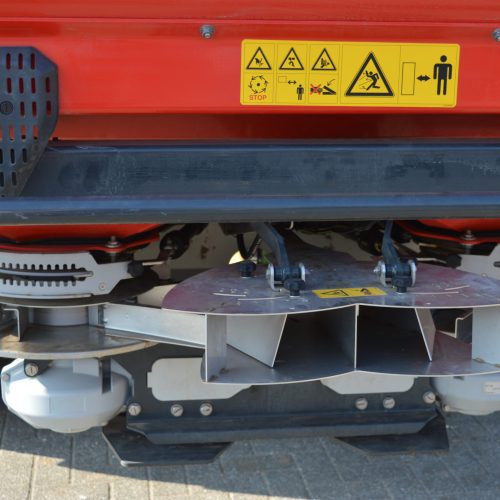
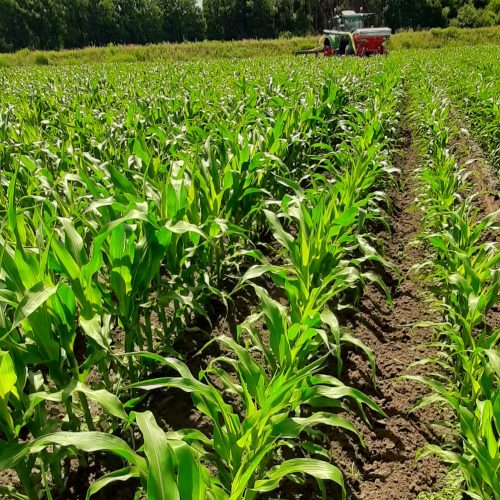
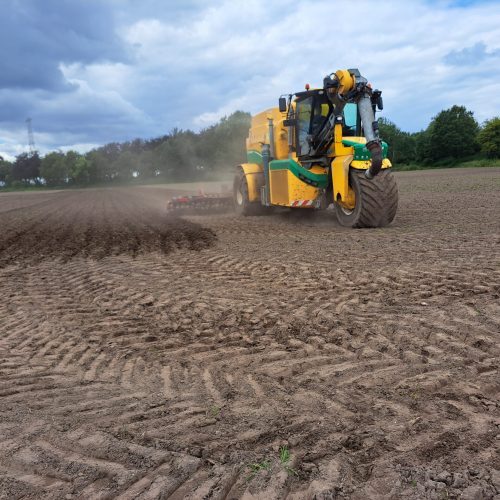
  • Fertiliser application during or after maize sowing,
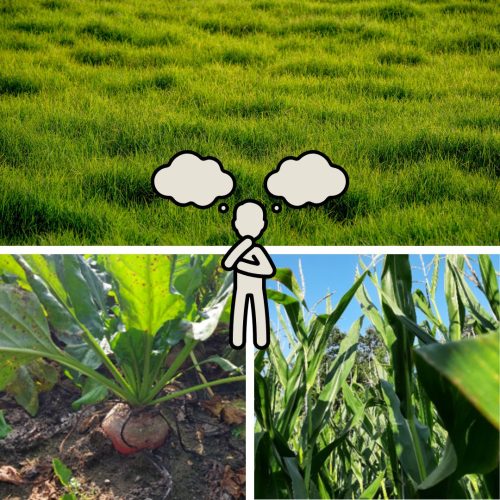
  • grassland tearing and the choice of an appropriate follow-on crop,
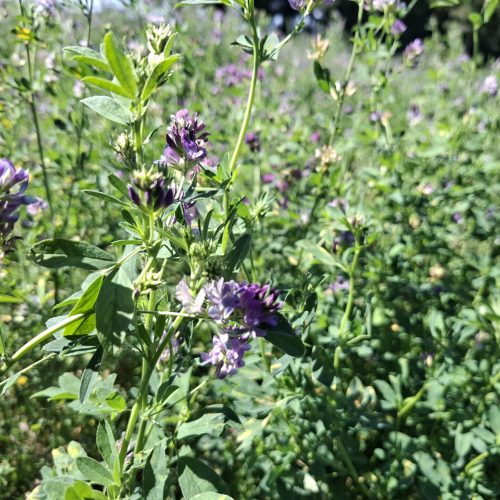
  • growing alfalfa or productive herb-rich grassland on sandy soils,
  • working to improve manure quality through your rations?

Then this is for you.

What do we expect from participants? Depending on the topic, you will test some things yourself on your farm and share your experiences with fellow farmers during thematic exchange moments. Because B3W is all about learning from each other and working together on soil and water quality.

Are you interested or would you like to know more? Please contact Marijke Gijbels at marijke.gijbels@pvl-vzw.be.

What is B3W?

B3W (Guidance Service for Better Soil and Water Quality) was established in early 2021 to support the objectives of the Flemish manure policy. It is a partnership of 13 knowledge and research centres, set up on behalf of the Flemish Land Agency. Our mission: to guide farms towards sustainable nutrient management and soil care so that soil fertility improves and losses to water, soil or air are reduced. Important in this is "peer-to-peer learning" where a farmer talks about his way of working and what it yields.

To this end, B3W is committed to three core activities:

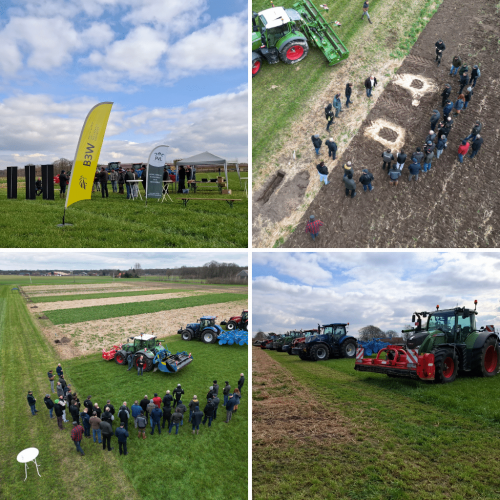
  • Thematic exchange moments: demonstration of good farming practice at a sample farm where a "farmer ambassador" explains his approach.
  • Focus groups: small learning networks (6-8 participants) to share knowledge and develop new insights.
  • Individual counselling: one-to-one consultancy programmes tailored to the company.

The role of PVL within B3W

We, the Agricultural Research and Training Centre, are one of the 13 partners in this partnership. In 2025, the following were implemented :

5 Thematic exchange moments
Green covers: how much do they bring in? + Demonstration of green cover cropping

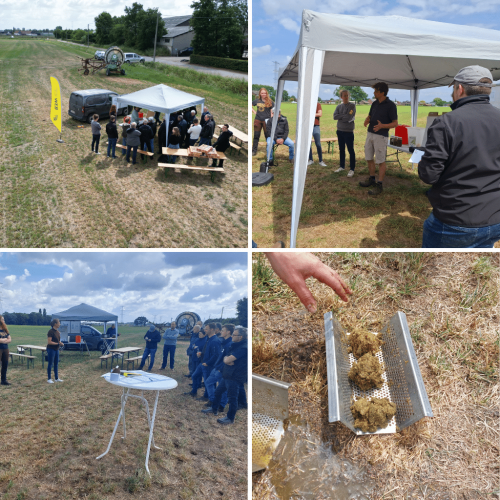
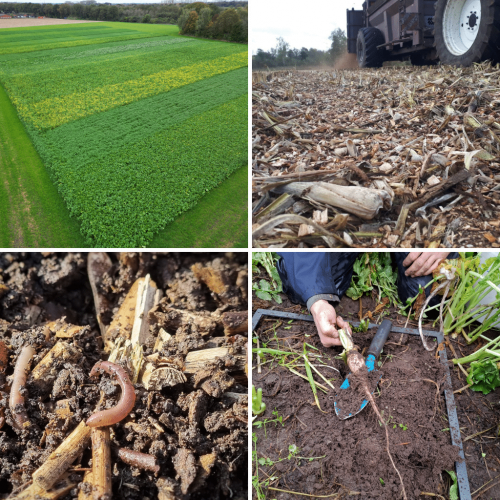
On Thursday 13 March 2025, the thematic exchange moment on green coverings took place on the plot located at the junction of Bekerstraat with Gorterstraat in 3640 Kinrooi. Farmer Bernard is a proponent of applying green cover crops. Apart from advantages such as adding organic matter, absorbing nutrients and breaking up disturbing layers via pen roots, a green cover also ensures continuous coverage of the soil, which benefits soil life. As part of the Leader project "Water quality, an integrated approach", 9 single and 4 mixtures of green cover crops were sown. The growth of each green cover crop was monitored throughout the autumn after which the above- and belowground biomass was determined as well as the residual nitrogen. In cooperation with B3W, a demonstration afternoon was organised during which expert Paul Ceyssens (Limagrain) explained the different green cover crops at the trial plot. Farmer Bernard was happy to share his experiences with green cover crops. Subsequently, the incorporation of the different green cover crops was also demonstrated. It became a successful exchange moment.

Groenbedekkers

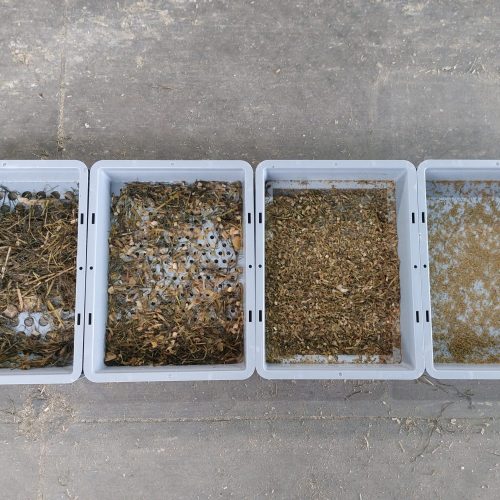
On Monday 26 May, the thematic exchange event on slurry quality took place. This event took place on a plot belonging to farmer Thomas in 3640 Kinrooi. Thomas is a dairy farmer from Kinrooi and has been paying attention to good soil biology for years. After all, a healthy soil is the start of everything. Among other things, the quality of your manure can have a great effect on biological life. During this TUM, farmer Thomas was happy to explain what he has been doing/trying to work on his slurry quality. He was therefore happy to share his experiences. Besides the experiences of Thomas and expert Tuur Vandeweyer, the manure toolbox was also demonstrated. Using this toolbox, attendees were shown how to determine their slurry quality. The differences in slurry quality, based on good and less good slurry, were also demonstrated.

B3D

Grass is by far the most important crop in Flanders. Indeed, grass (clover) is the main source of protein on a dairy farm, its yield largely determining the need for soya purchases from other regions. The area of permanent and temporary grassland in Flanders amounts to no less than 220 thousand hectares. There are also 20 thousand hectares of grass-clover and 1880 hectares of herb-rich grassland. However, there are still many yield and efficiency gains to be made in grassland too.

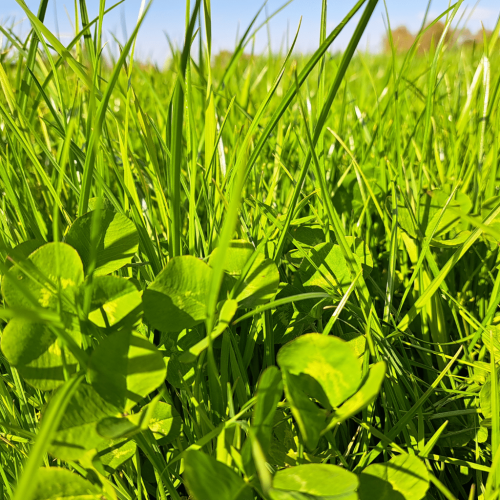
During a thematic exchange moment on grass-clover on Wednesday 9 July 2025, dairy farmers and experts shared their experiences and insights. Organic dairy farmer Stef spoke enthusiastically about the practicalities of grass-clover on his farm, while Wim Govaerts of Govaerts & Co, a consultancy for dairy farms, explained the advantages and possible disadvantages of grass-clover.

The result? An inspiring afternoon full of knowledge sharing, practical tips and new insights for anyone working with grassland and grass clover.

Grasklaver

The thematic exchange event on soil compaction in grassland is scheduled for August/September.

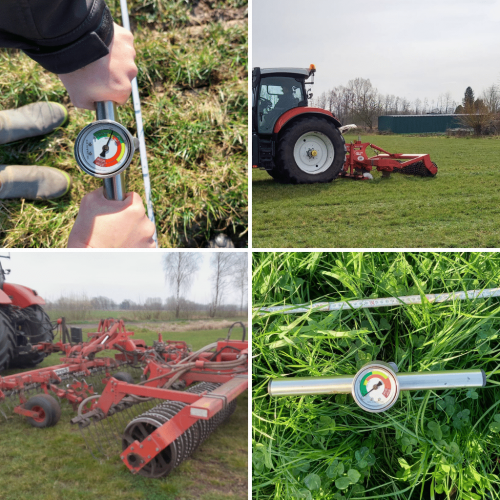
This thematic exchange moment is linked to a persuasion field. A grass-clover plot with compacted layers was monitored throughout the season at dairy farmer Frank. Indeed, Frank attaches great importance to making the best possible use of all self-produced feed products. However, the past two growing years (2023 + 2024) were dominated by wet weather conditions. Dairy farmer Frank is experiencing the negative effects of this on his recently sown grass-clover plot. The grass lags in growth and consequently does not yield the desired yields. After a previous crop of maize and fodder beet, the plot was sown with grass clover in autumn 2023. This plot has a history of a high water table and therefore never dries out completely. This makes the plot ideal for grass, but can be more challenging for other crops if there are disturbing layers in the soil. To optimise grass establishment, the plot was ploughed and sown with a Swincosem combination. However, wetter soil conditions caused compaction and even rutting in certain parts of the plot. Dairy farmer Frank is therefore keen to eliminate soil compaction in his grass-clover plot.

B3W follows up the grass-clover plot, located on Frank's home plot. Using two different machines (Heva Grass Tiller & Evers Grassprofi overseeder), an attempt was made to eliminate soil compaction. Want more information around this persuasion plot, then be sure to check out our blog!

Verdichting grasland

The thematic exchange event around fodder beet in the ration is also scheduled for August/September.

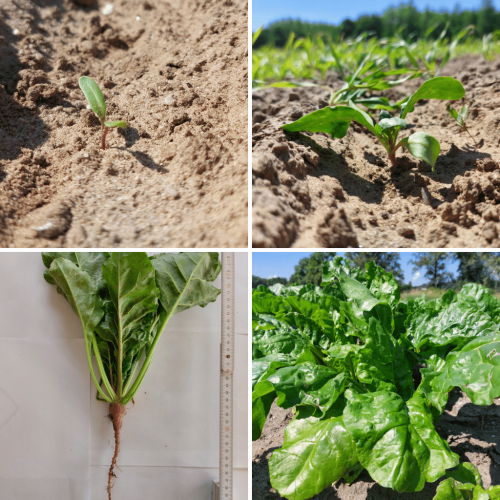
This thematic moment of exchange is linked to a field of persuasion. For years, dairy farmer Rob has been providing fodder beet in his dairy cattle's rations. He is therefore firmly convinced of the added value offered by fodder beet. They have a high feed value and add flavour to the ration, boosting feed intake. This translates into higher fat and protein content.

In the context of preventing wind erosion on sandy soils, Rob sows an anti-pest cover barley. Furthermore, the barley also reduces aphids and yellowing disease. Rob has been using this technique for several years and is very satisfied with it. A fodder beet plot located at Rob's home plot was monitored throughout the season. Are you curious about the results, then be sure to check out the blog!  

Voederbieten

PVL supervises a focus group of about seven farmers with a strong interest in soil care. This group meets three times a year to exchange experiences, ask questions, share new insights and learn together about sustainable soil management. One way of doing this is by inviting an expert, another is to take part in demo days or to plan a visit to a pilot farm. The focus group farmers, for instance, already showed their interest in farm composting: what is legally allowed, what is the best practical approach and how do the costs compare to the benefits? We are therefore currently working hard to organise the 2nd focus group meeting on farm composting.   

The focus group provides space not only for exchange, but also for action. Experiments within the group include non-killing tillage, woodchip incorporation and complex green cover construction.

6

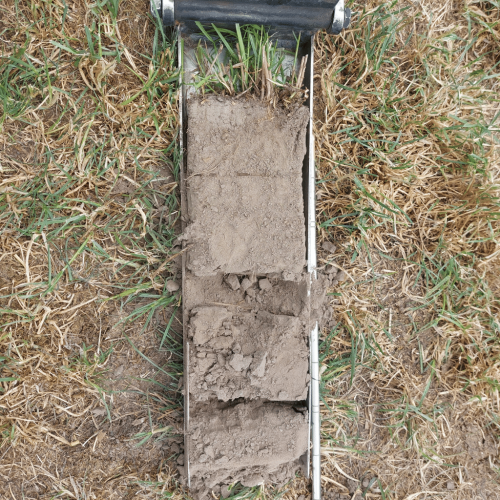
PVL guides three farmers individually on the topic of sustainable soil management. In a first phase, we map the farm based on soil analyses, tillage operations carried out, crops and other relevant data. This is followed by a field visit, during which we closely assess the soil condition via a spade cutting. For this, we use the guide ''Testing your own soil' (this guide was designed within B3W). Based on the findings, we provide targeted advice on possible actions farmers can take to improve and maintain soil quality.

7
Do you still have questions? Or would you like to be involved within the operation of B3W? Then you may always contact marijke.gijbels@pvl-vzw.be

Get in touch

Contact Us